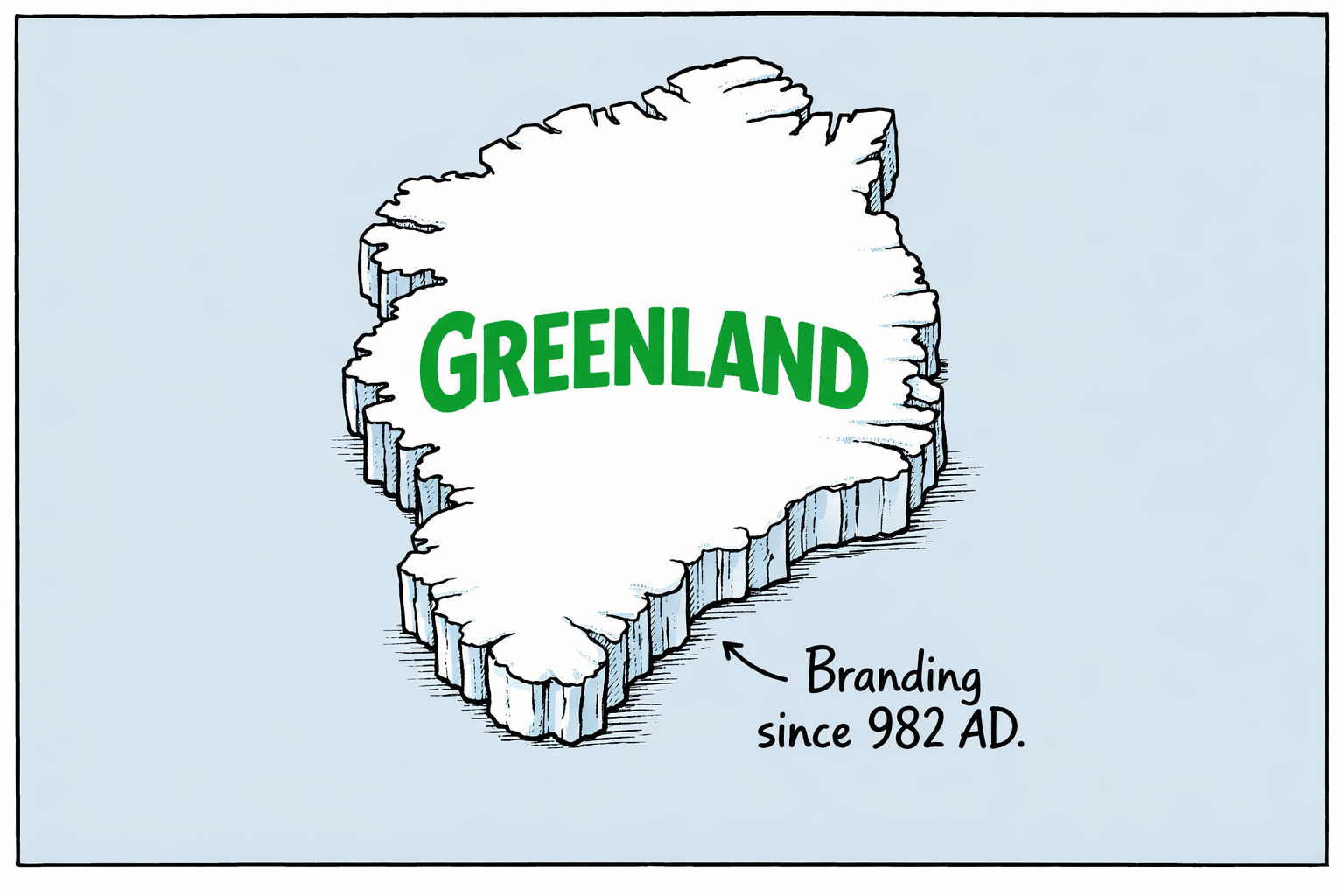
Greenland is not green.
It should be called Whiteland.
It is white.
Blindingly white.
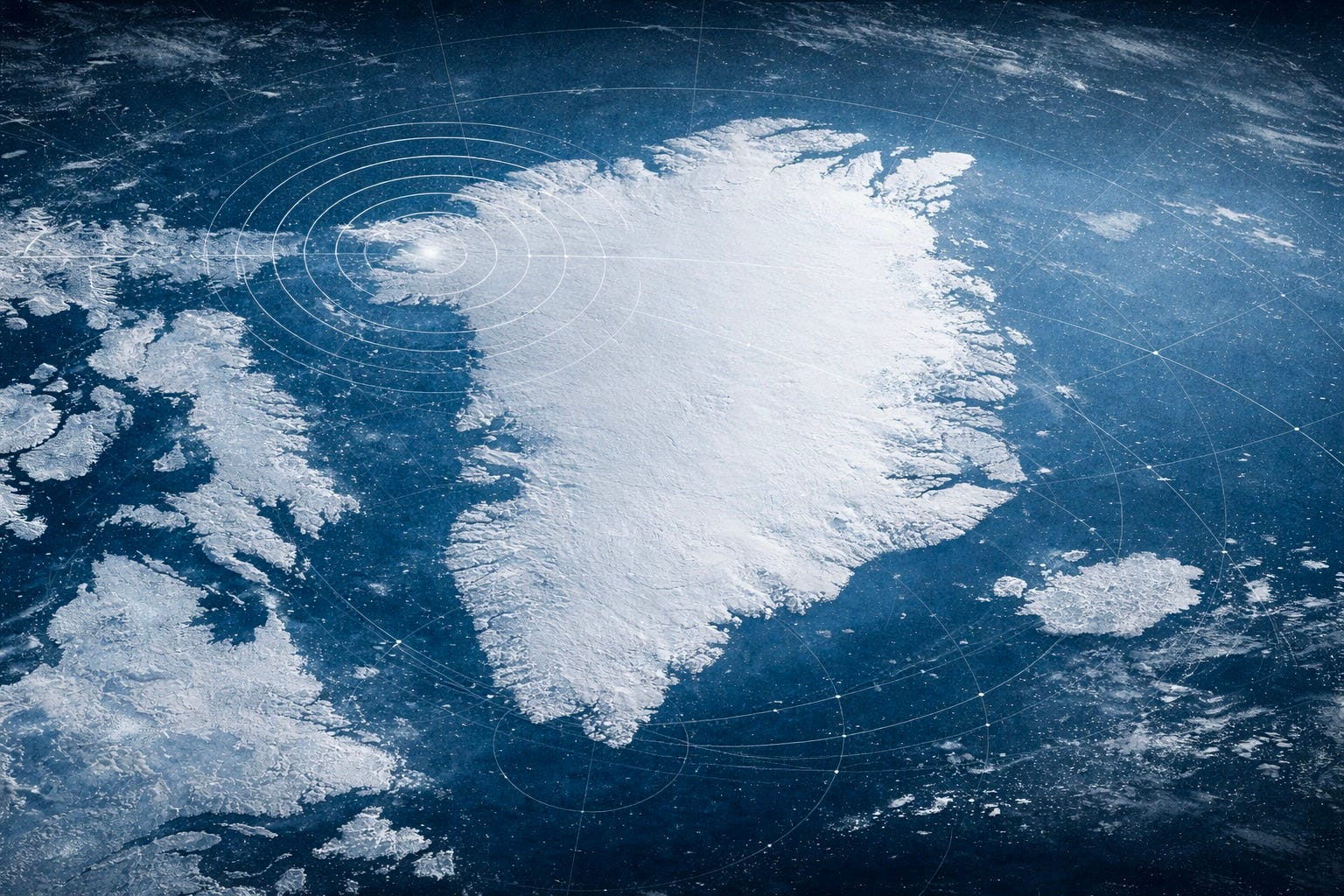
About 80 percent of it is covered by ice—glaciers, ice sheets, compacted centuries of frozen weather.
The greenery, such as it exists, clings to the margins only briefly in summer.
So why is it called Greenland?
Because Whiteland tested poorly with focus groups.
No, not true.
Because it was considered racist? (Someone call Don Lemon, quick!)
No.
It got named Greenland because lying about things you’re trying to sell goes way back—in this case, ten centuries.
The name comes from Erik the Red, a Viking with a marketing problem and a criminal record.
Exiled from Iceland for murder, he sailed west and found a landmass that was cold, remote, and not especially forgiving.
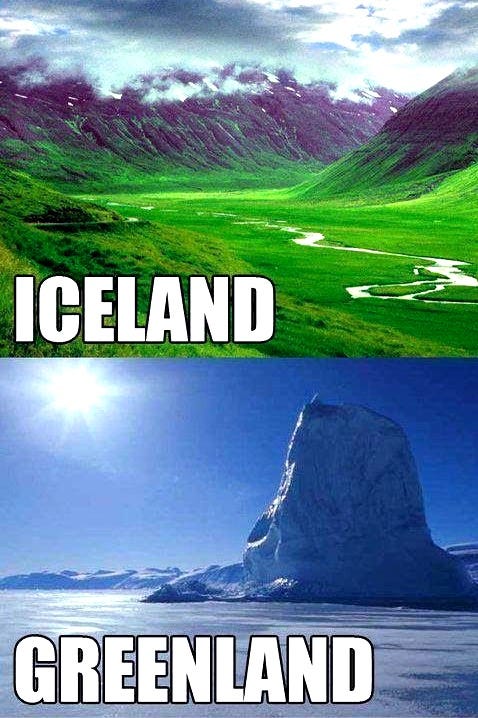
Looking to attract settlers, he chose a name that emphasized possibility over accuracy.
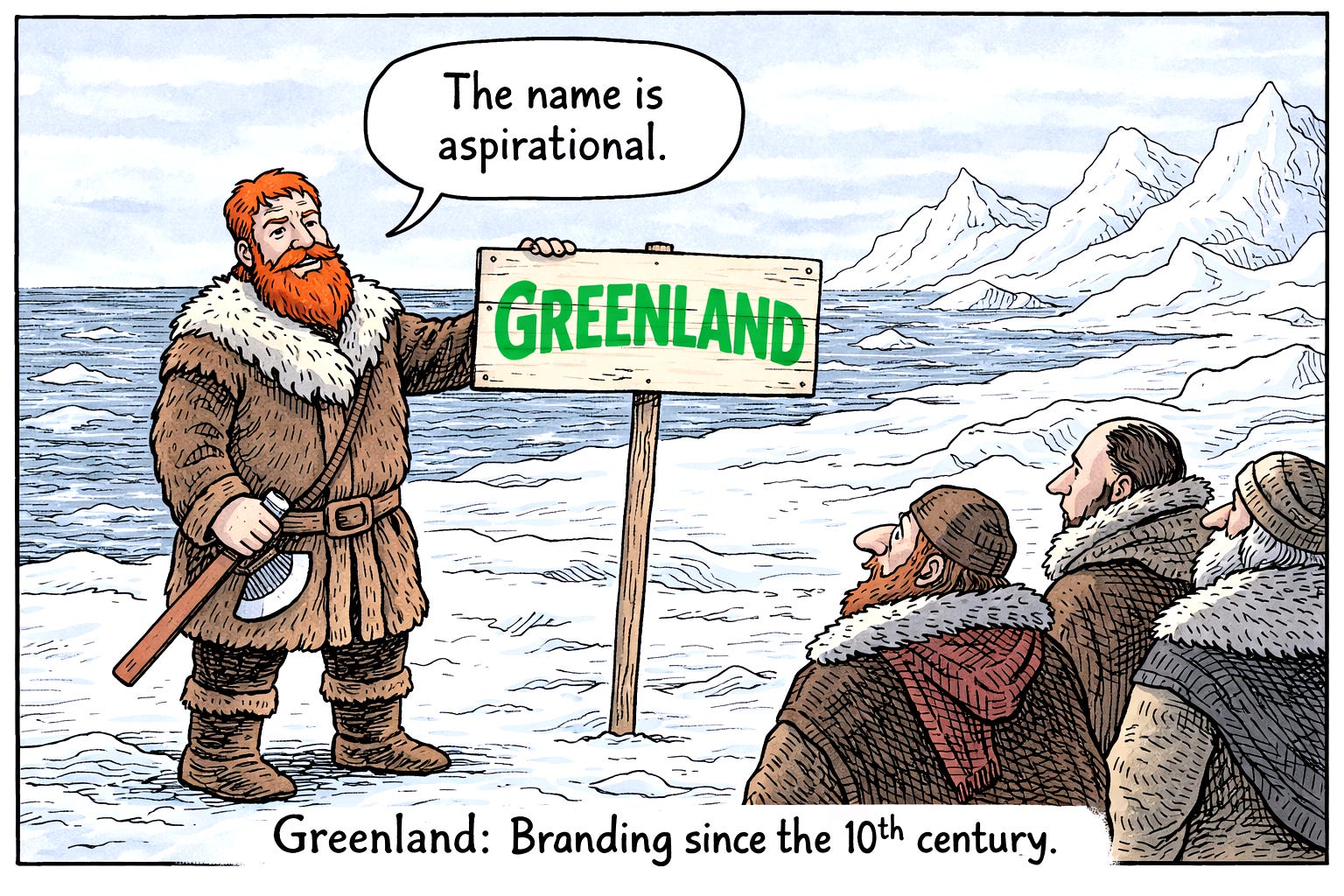
Greenland, he figured, sounded more enticing than Ice with Rock.
It worked.
People came.
This may be the earliest documented case of branding outrunning product reality.
Erik projected farmland. Settlers projected opportunity. Empires later projected territory.
Militaries and think tanks now project strategic significance.
Greenland itself mostly projects snow.
Everyone thinks they’ve discovered it. Everyone thinks they’re the first to notice it matters. Everyone is late.
Greenland has been sitting there the whole time, unchanged in its indifference, while the rest of the world cycles through obsessions.
The ice does not react to policy papers.
Greenland keeps getting dragged into conversations it didn’t start, about futures it didn’t design, by people who won’t stay long.
When powerful people start speaking loudly about a quiet place, the noise usually says more about them than it does about the place.
Greenland has outlasted empires by doing absolutely nothing.