

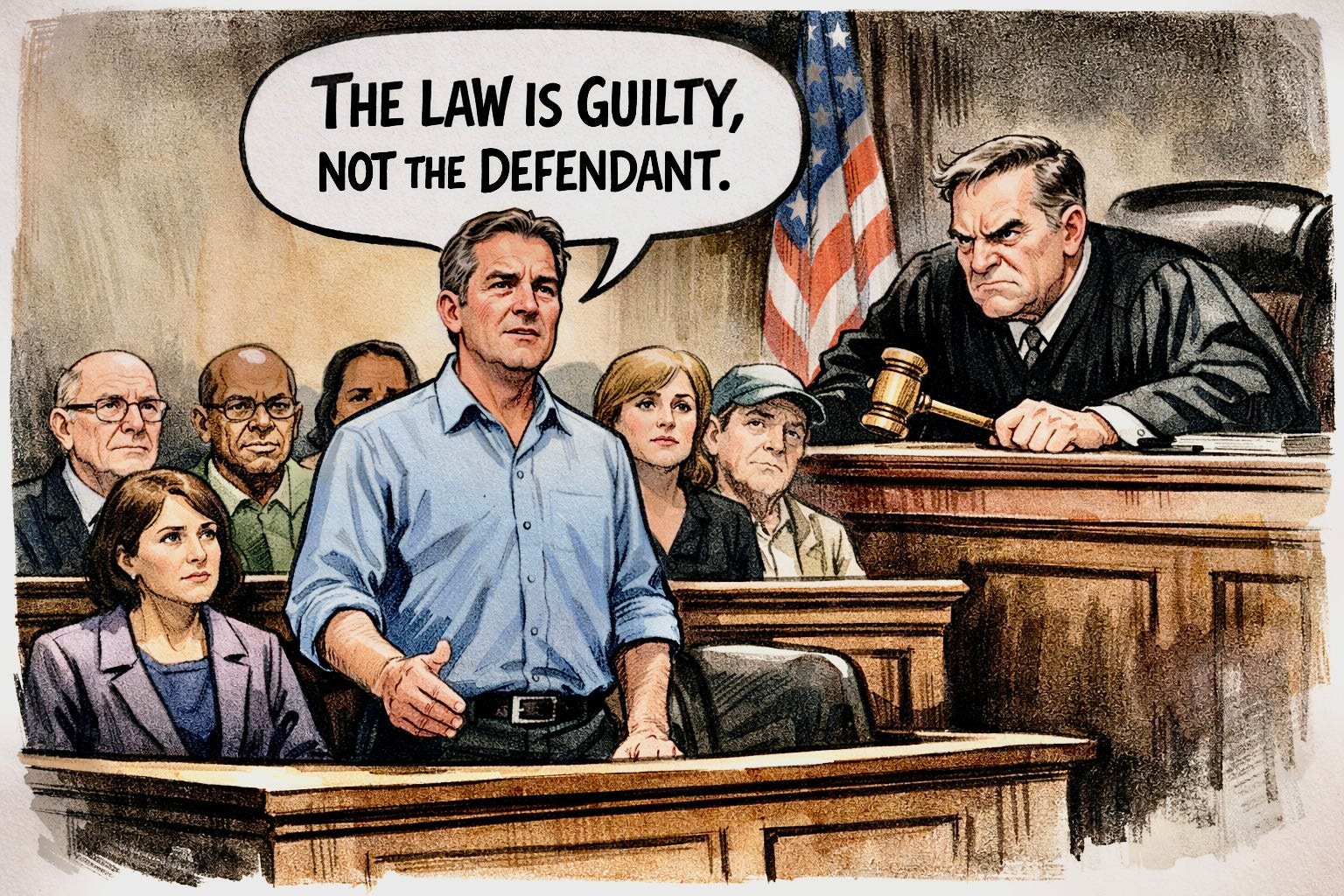
There is a quiet, awkward truth embedded in the American justice system—so awkward that judges lower their voices when it comes up, prosecutors pretend it doesn’t exist, and jury instructions carefully step around it like a landmine.
It’s called Jury Nullification of Law.
Otherwise know as Jury Power.
A juror can acquit a defendant even when the law has clearly been broken, if the juror believes the law itself is unjust, misapplied, or offensively stupid. No appeal. No override. No do-over. Once acquitted, the defendant walks—and the system has to live with it.
This is not a loophole. It is a feature.
Why Courts Hate It
Judges hate jury nullification because it introduces human judgment into a system designed to run on rules.
Courts want predictability. Precedent. Obedience. The law, applied cleanly and mechanically, like a spreadsheet with robes.
Jury nullification wrecks their world.
It says: Yes, the defendant broke the law—but no, we’re not enforcing it today.
It says: Your statute may be legal, but it isn’t legitimate.
It says: We were asked to judge a human being, not rubber-stamp a regulation.
That makes judges nervous. Very nervous.
So nervous, in fact, that potential jurors are never told about this power during questions about their suitability. Judges will tell jurors they must “apply the law as instructed,” while quietly knowing that—legally—they cannot force them to do so.
The irony is rich enough to be taxed.
The Right That Isn’t Written—But Can’t Be Taken Away
Jury nullification isn’t spelled out in neon in the Constitution. It doesn’t need to be. It flows naturally from two facts the system cannot escape:
Jurors cannot be punished for their verdicts.
An acquittal cannot be overturned.
Those two realities create a space where conscience lives.
Historically, juries have used this power to refuse to convict under the Fugitive Slave Act, acquit defendants charged under Prohibition laws, resist prosecutions seen as politically motivated or morally wrong.
Jury nullification is what happens when the law runs too far ahead of justice—and ordinary citizens pull it back by the collar.
Why It Still Matters
Today, jury nullification is treated like a ghost story told at law schools after dark. Uncomfortable and embarrassing. Best not discussed.
Just pay jurors a pittance and shepherd them like cattle through the courthouse and the law books.
That’s precisely why it matters.
Because in an age of over-criminalization—where there are more laws than any citizen can possibly know—jury nullification is one of the last remaining brakes on legal overreach.
And since it takes 12 out of 12 jurors to convict, guess who’s really the boss?
But only if you understand your full power as a juror.
Note: If you are a proponent—as I am—of Jury Power, if you make the Court aware of this when asked questions during jury selection, it will probably get you dismissed from duty and, thereafter, stricken from jury duty lists.
Also: Despite your legality as a juror to nullify law, some judges have in the past sanctioned jurors who, post-trial, announced their reasons for acquitting a defendant. Given the hostility of the judiciary toward Jury Power, it is important to understand that you are not obliged to explain your reason for acquitting a defendant. You reach a verdict, deliver it, obligation complete.
Respectfully disagree with your suggestion in final paragraph of your excellent Comment. Don’t throw away your Jury Power; you might just get the opportunity to use it for Justice.
No judge and no trial lawyer will ever inquire about Jury Nullification, so why volunteer your views?