

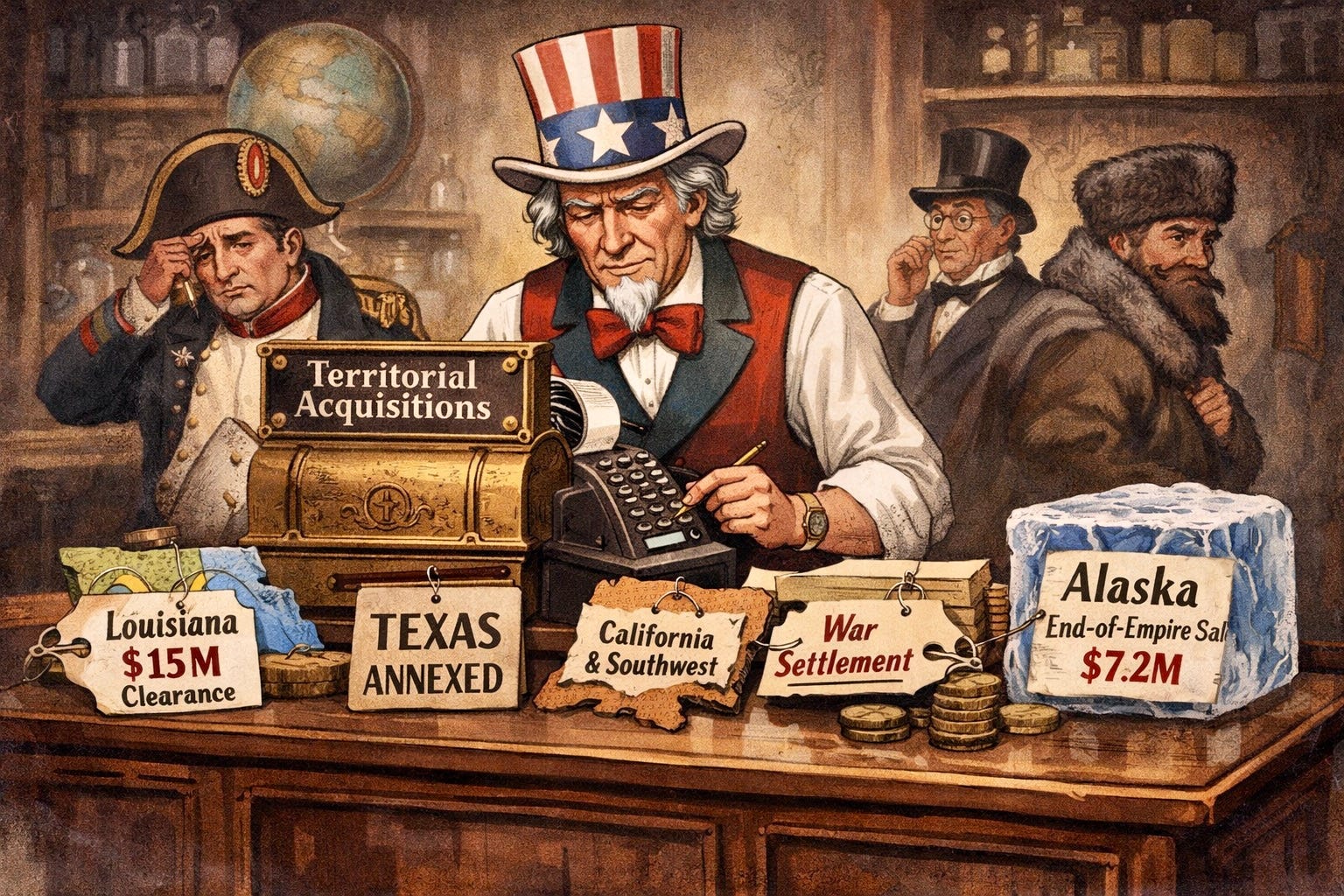
Part II of today’s post on long-game players.
I stated that Richard Nixon was the best modern foreign policy president.
Two centuries ago we had two presidents (Thomas Jefferson and James Polk) and a secretary of state (William Seward) who were also long-term players in their strategic foreign policy maneuvers and negotiations.
In his insightful column, educator/historian William Moloney provided a history lesson.
“Rooftop rivalry over Greenland pits U.S. against Russia, China” (William Moloney, columnist)
This led to my own research and commentary:
The United States did not grow by accident.
It grew because other empires were tired, broke, distracted, or scared—and forward- thinkers in Washington were thinking strategically.
The Louisiana Purchase (1803)
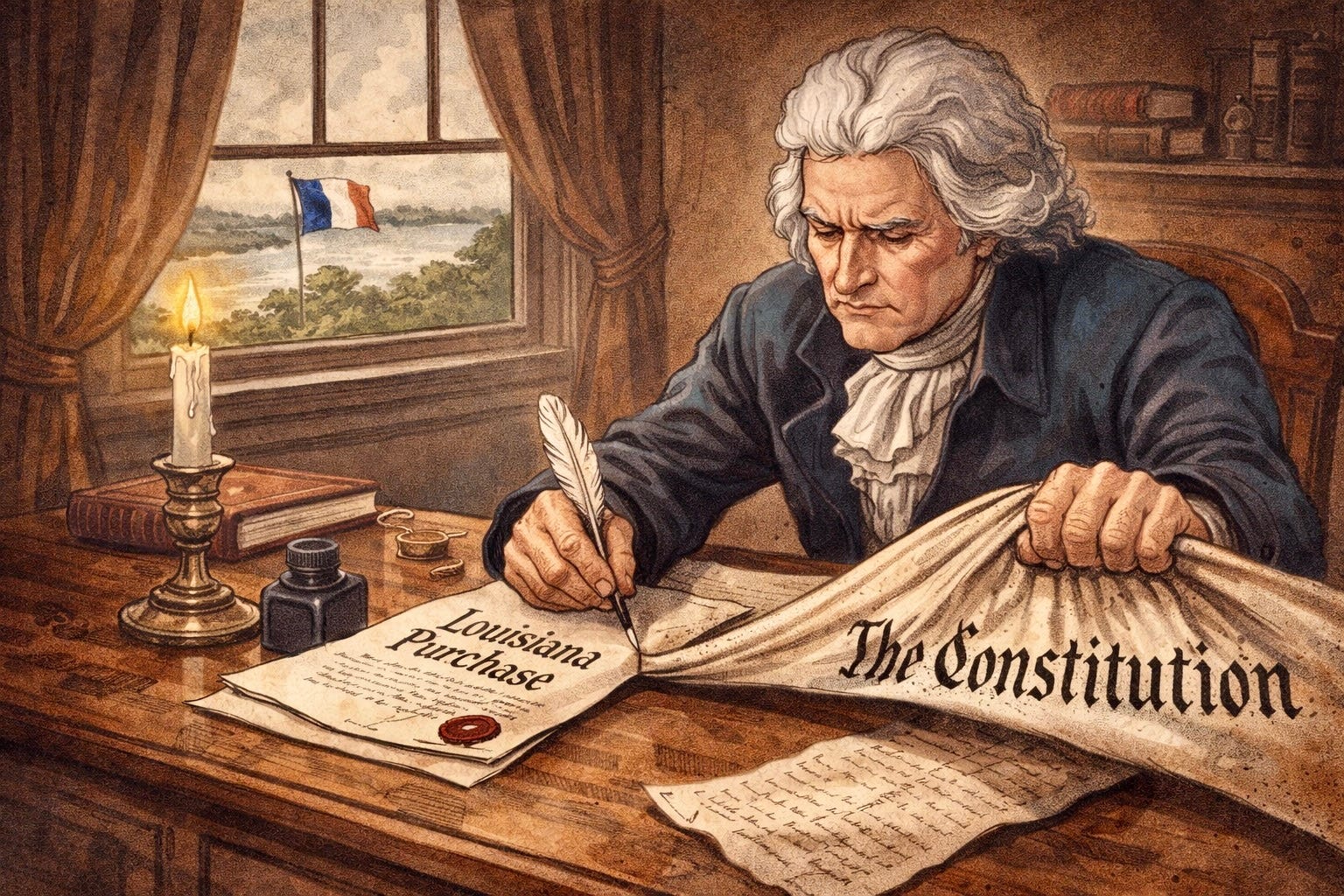
Thomas Jefferson is remembered as a philosopher-statesman and as the primary author of the Declaration of Independence.
Occasionally glossed over is that Jefferson panicked when Spain quietly handed Louisiana back to Napoleon Bonaparte. His strategic concern: If France shut down New Orleans, the American economy would be strangled overnight.
Jefferson didn’t have clear constitutional authority to buy foreign territory. So he drafted new amendments to justify it.
Napoleon, meanwhile, had bigger problems: a slave revolt in Haiti destroying his Caribbean ambitions, a looming war with Britain, and an empty treasury.
So when American envoys showed up prepared to negotiate, Napoleon sold everything—828,000 square miles—for $15 million.
No battle. Just a real estate transaction conducted under geopolitical duress.
Jefferson later admitted he’d stretched the Constitution like taffy. And in so doing, doubled the size of the country.
Texas (1845)
Texas wasn’t “won.” It was absorbed after a rebellion the United States officially disavowed while quietly benefiting from it.
American settlers poured into Mexican Texas under liberal land policies, then ignored Mexican law—most notably by importing enslaved labor into a country that had abolished slavery. Mexico pushed back. The settlers revolted. Washington did not direct the rebellion, but neither did it intervene; it observed, maintaining plausible deniability while events moved in a favorable direction.
When Texas declared independence in 1836, the United States deliberately held back from immediate annexation—not out of principle, but calculation. Absorbing Texas would have meant war with Mexico, and for nearly a decade Washington chose patience over confrontation.
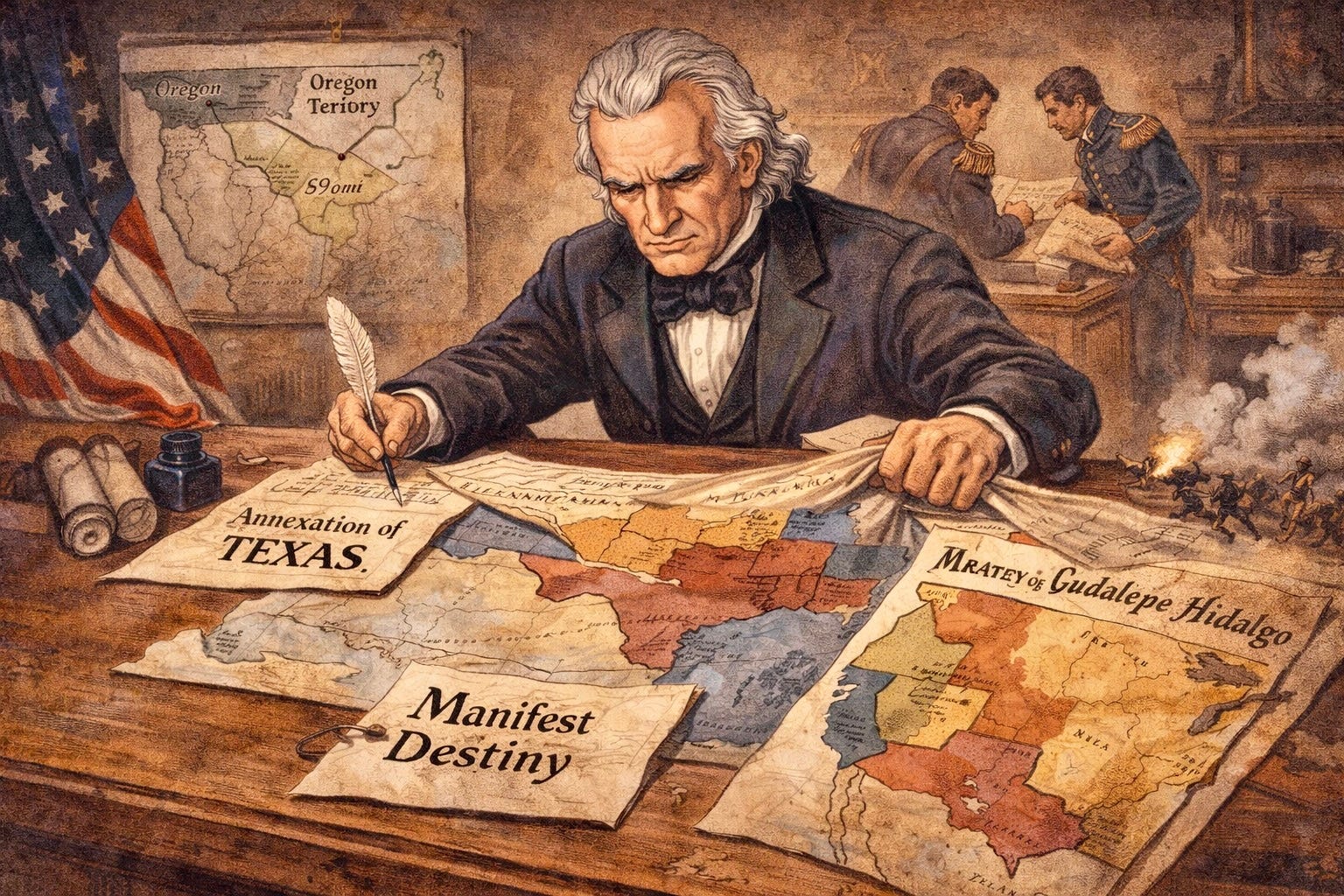
That restraint ended with the election in 1844 of James K. Polk, arguably the most effective one-term president in American history.
Polk ran his campaign on a platform of territorial expansion. He meant it. And upon entering the White House determined to finish what circumstance had already begun.
Texas was annexed in 1845. War followed.
Polk didn’t stumble into it—he maneuvered into it—and won.
Oregon (1846)
While rattling sabers with Mexico, Polk simultaneously stared down Britain over the Pacific Northwest.
The slogan was “54°40′ or Fight!” Pure theater. Polk had no intention of fighting the British Empire while also fighting Mexico.
So Washington negotiated.
The Oregon Treaty split the difference at the 49th parallel—and the U.S. walked away with what became Washington, Oregon, and Idaho.
No heroic charge. Just a clean deal because Britain had other fires to put out.
California & the Southwest (1848)
The Treaty of Guadalupe Hidalgo ended the Mexican-American War—and transferred 525,000 square miles to the United States: California, Nevada, Utah, Arizona, New Mexico plus chunks of Colorado and Wyoming.
Mexico received $15 million.
Alaska (1867)
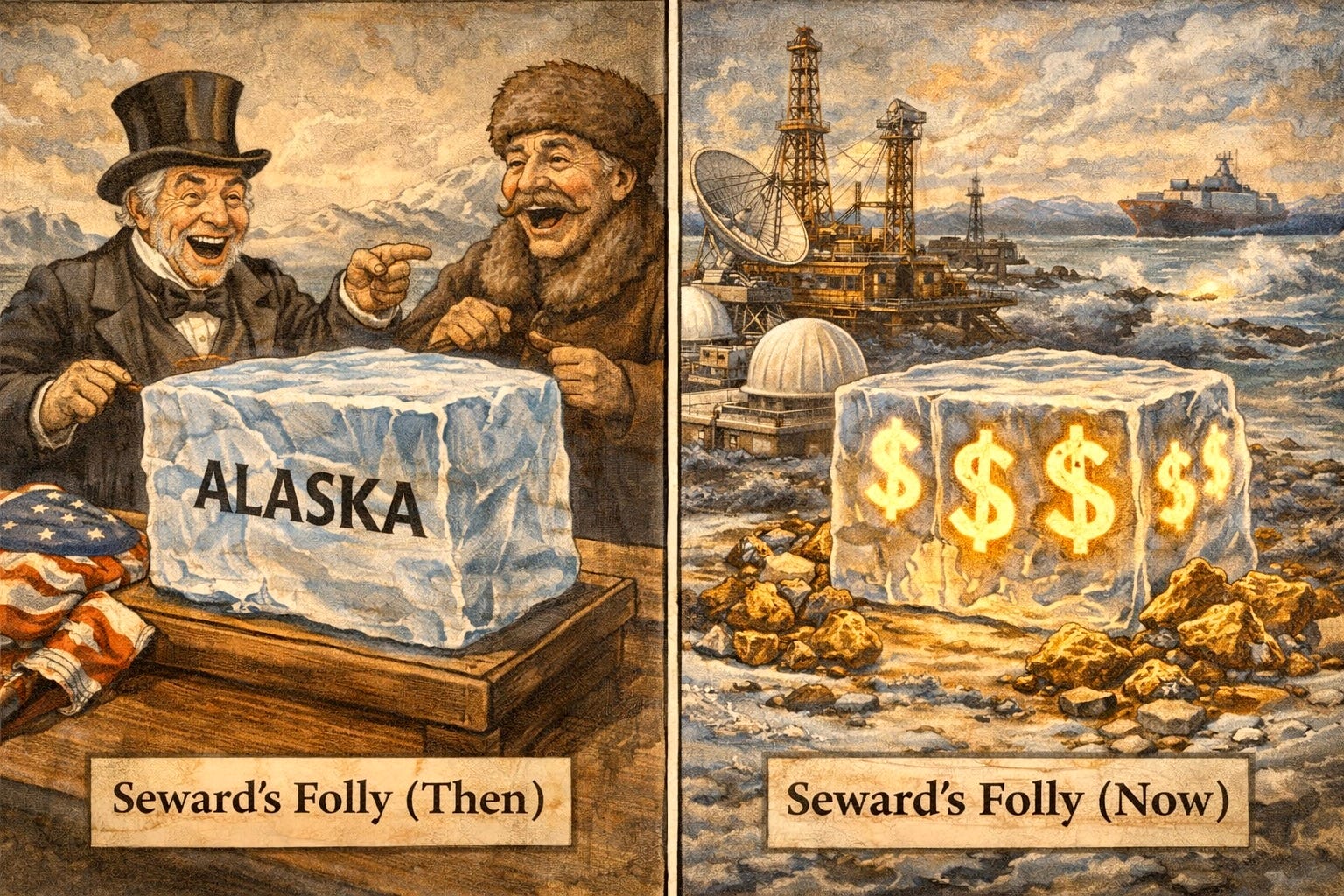
Russia was broke, overextended, and terrified Britain would seize Alaska in a future war.
Selling it to the U.S. kept it out of British hands.
$7.2 million. 586,000 square miles.
“Seward’s Folly,” they called it.
First came gold. Then oil. Then the Arctic.
History has forgiven William Seward.
The Pattern
Every major acquisition followed the same template:
Another power weakened.
The U.S. applies pressure or cash.
Legal justification follows later.