

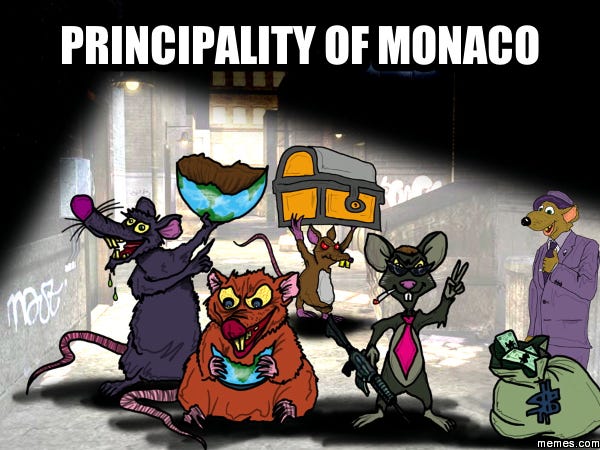
Claude Palmero—the disgraced former Palace accountant who buried embarrassments, including his own deceit and corruption—is about to publish his memoir.
For a quarter-century, Palmero administered the Crown’s assets and handled the “reserved” files that never saw daylight. He was appointed by Prince Rainier and, after Rainier’s death, continued under Prince Albert—who should have cleared the Palace stables of the accumulated manure (primarily Palmero) and brought in his own ethical appointees (as he’d promised his subjects at his investiture).
Now this crybaby emerges as the aggrieved truth-teller. The man who “knew too much.” The victim of leaks, raids, police custody, and alleged judicial manipulation.
Palmero claims he tried to inject competition and transparency into Monaco’s real-estate development sector—the Principality’s primary engine of wealth.

What he does not say is that he also attempted to reroute influence and advantage in directions that benefited himself through secret stakes and corrupt commissions.
I know this firsthand.
As Prince Albert’s intelligence adviser—his so-called “spymaster”—working hand-in-hand with Monaco’s shocked (and silenced) police department, I saw enough of the machinery to understand how it operated.
Palmero was not the conscience of a corrupt system.
He was one of its architects.
His promotional narrative speaks of a “stranglehold” on the Principality.
He cites entrenched interests.
He describes himself as the target of a massive data leak in 2021 and a sudden ouster in 2023.
Yes, his own misconduct and corruption was exposed on the internet, and he was dismissed in disgrace—marched out of the Palace by the Carabinieri.
Palmero now alleges judicial weaponization and institutional retaliation. He promises to expose the hidden face of power on the Rock. He speaks of restoring his honor.
Truth is, Palmero lacks honor and was fired for good reason.
The Principality runs on proximity—to land, to capital, to permits, to influence. Real estate is not merely development; it is leverage. Those who manage it manage shape the skyline—and the fortunes attached to it.
Palmero sat at that junction for a generation—and did his corrupt best to manipulate outcomes.
On 19 March, my own book, Spymaster of Monte Carlo, will be published.
It will detail what I witnessed, including the financial maneuvering and internal dynamics that Palmero now attempts to reframe. The record, as I experienced it, is more complex—and much less flattering to him.
Monaco may indeed be in turmoil.
But before accepting Palmero’s indulgent self-portrait as a martyr to reform, understand this:
Palmero did not merely observe what was wrong with the Principality.
He occupied and dictated a significant portion of it.
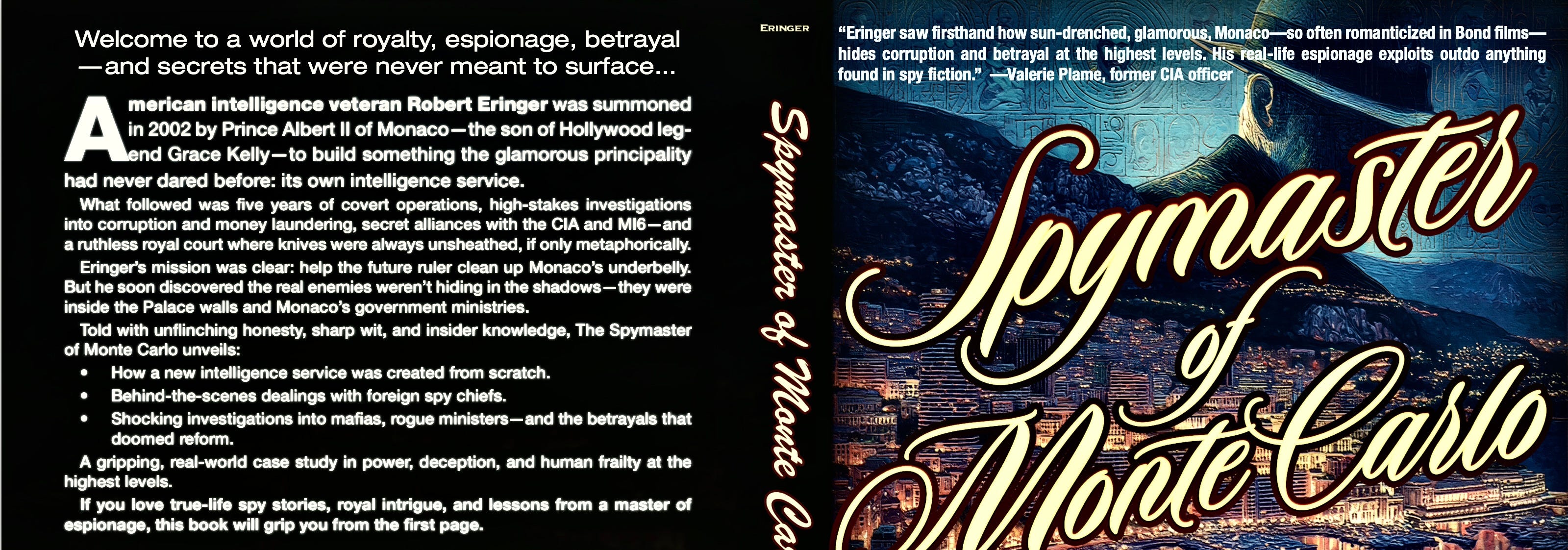

The Spymaster of Monte Carlo, Amazon