

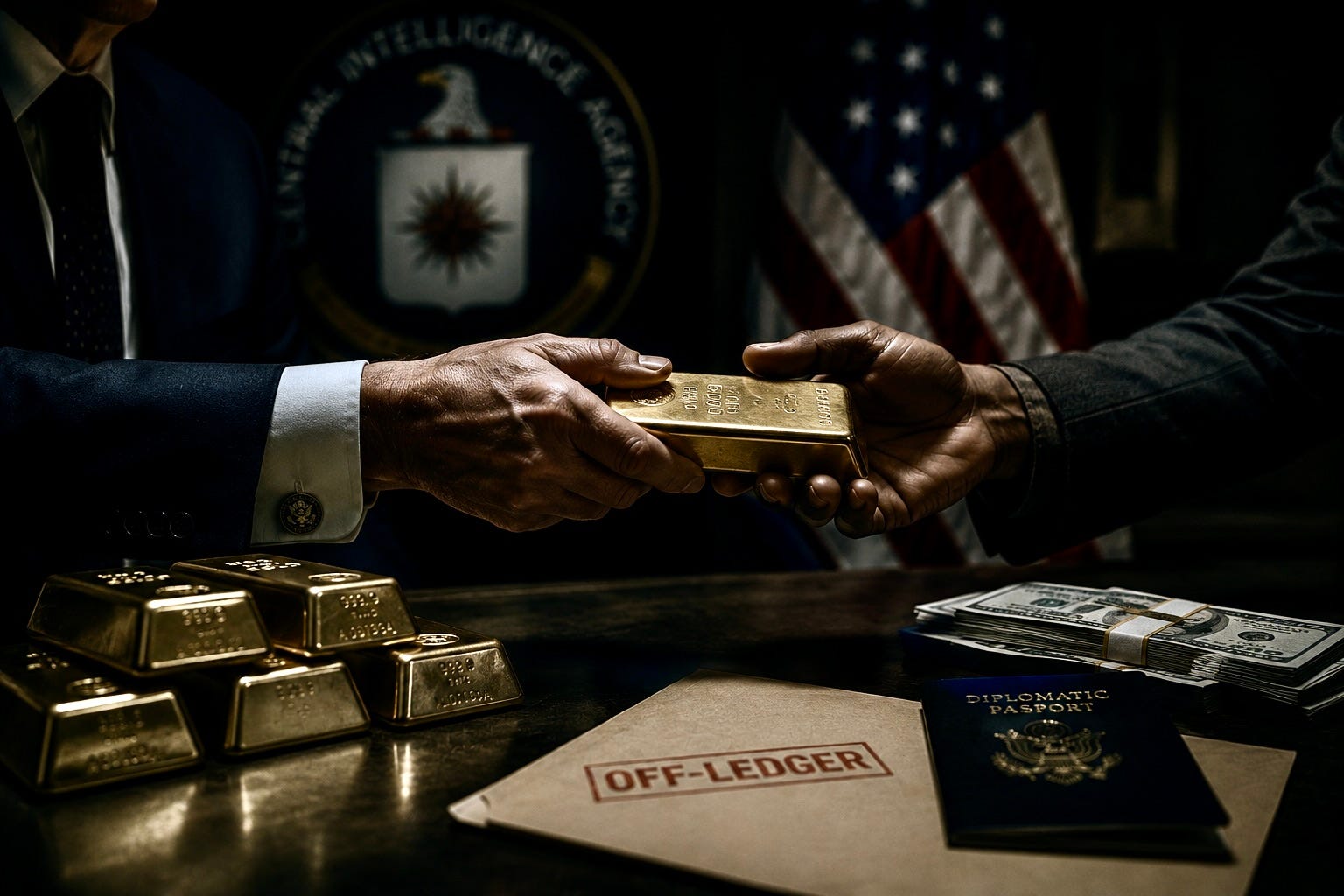
“Top CIA boss raided over mind-blowing fortune: $40M in gold bars, $2M in cash and THIRTY-FIVE luxury watches” (Daily Mail)
How does an intelligence service entrusted with guarding national secrets allegedly fail to detect a senior officer building his own Fort Knox?
There are only two plausible explanations for this very strange story.
Neither reflects well on the CIA.
Scenario One:
The Agency’s internal oversight mechanisms are astonishingly incompetent.
Scenario Two:
This is actually an espionage case being publicly reframed as embezzlement to avoid institutional humiliation and more serious congressional attention.
Choose your poison.
According to allegations, former CIA officer David Rush accumulated 300 gold bars, $2 million in cash, 35 Rolex watches, and other undeclared assets while operating inside America’s premier intelligence service.

The official story—and court filings—stipulate greed, theft, and financial misconduct.
But veteran intelligence officers do not hear “300 gold bars” and immediately think “simple embezzlement.”
They think of something far murkier.
They think: espionage payoff.
As in, covert, untraceable payments from a foreign intelligence service.
Espionage cases often hide inside financial cases.
If this was merely theft, then the CIA appears breathtakingly reckless.
Who exactly authorized a senior officer access to extraordinary quantities of portable hard wealth?
What covert program supposedly required such bullion reserves?
What accounting system monitored it?
Who signed off?
What controls existed?
This is the same institution, remember, that polygraphs recruits over forgotten college acquaintances and unexplained lunch receipts.
Yet somehow, according to allegations now emerging, millions in gold allegedly floated through operational channels without triggering meaningful alarm.
If that is the real story, then the scandal is not simply corruption.
It is institutional stupidity.
But the alternative explanation is even more uncomfortable: that the CIA is deliberately shrinking a larger espionage problem into a narrower corruption narrative to contain fallout.
Intelligence services have long understood that when a scandal becomes sufficiently dangerous, the safest response is not denial but reduction.
Make the story smaller. Make it tawdrier.
“Rogue official steals gold” is manageable.
Then hope nobody notices the machinery behind the curtain.